Countdown:
Paper submission due:
February 15, 2027
Paper acceptance due:
March 15, 2027
Registration deadline:
April 15, 2027
Conference date:
May 21-23, 2027
Organizer:
Dalian Jiaotong University
In Association With
Beijing University of Technology
Chengdu University of Information Technology
School of Electrical Engineering and Information, SouthWest Petroleum University
School of Software, Nanchang Hangkong University
Key Laboratory of Jiangxi Province for Image Processing and Pattern Recognition
School of Software, Taiyuan University of Technology
General Chair:
Carlos M. Travieso-González, University of Las Palmas de Gran Canaria, Spain
Ljiljana Trajković, Simon Fraser University, Canada
Yufei Ma, Harbin Institute of Technology, China
Co-Chair:
Jun Liu, Chengdu University of Information Technology, China
Samuel Fosso Wamba, TBS Education, France
Shunli Wang, Inner Mongolia University of Technology, China
Sos S. Agaian, City University of New York, USA
Yu-Dong Zhang, Southeast University, China
-
Email:
-

Daniel Thalmann: Professor, Swiss Federal Institute of Technology Lausanne, Switzerland.
Research field: Virtual Humans, Virtual Reality, Computer Graphics, Computer Animation, Crowd Simulation, Human–Computer Interaction, Embodied Intelligence, Intelligent Virtual Agents.
Prof. Daniel Thalmann is an internationally renowned scientist and a pioneer in the fields of Virtual Humans, Virtual Reality, Computer Graphics, and Crowd Simulation. He currently serves as Honorary Professor at École Polytechnique Fédérale de Lausanne (EPFL), Switzerland, and Director of Research and Development at MIRALab Sàrl. He is the founder of the Virtual Reality Laboratory at EPFL and has made pioneering contributions to digital humans, intelligent virtual environments, and immersive interactive systems. Prof. Thalmann received his Ph.D. in Computer Science from the University of Geneva in 1977. He has held academic positions at internationally recognized institutions, including EPFL and the University of Montreal, and has served as visiting professor at several leading universities worldwide. He has published more than 600 scientific papers and over 30 books in computer graphics, virtual reality, animation, and simulation, with his research widely recognized in the fields of virtual human modeling, autonomous agents, and crowd simulation. Prof. Thalmann is the recipient of numerous international honors, including the Eurographics Distinguished Career Award, the CGI Career Achievement Award, and the Canadian Human Computer Communications Society Achievement Award. He has served as editor, editorial board member, and chair of numerous international journals and conferences. His pioneering work has significantly influenced emerging areas such as digital humans, human–computer interaction, and embodied intelligence.
-

Yu-Dong Zhang: Professor, Honorary Fellow, World Leadership Academy Fellow, IET/SCM/EAI Fellow, IEEE/ACM/IES Senior Member, Southeast University, China
Research field: Artificial Intelligence, Computer Vision, Stroke Screening, Drug Delivery Robots, Large-Scale Imaging Models, Medical Image Post-Processing, Brain-Computer Interface.
Prof. Zhang is a Changjiang Scholar and a nationally recognized high-level talent in China. He is the recipient of a major national talent program award and currently serves as Chief Professor and Doctoral Supervisor at Southeast University, China. He completed postdoctoral training at a leading university in the United States. He has held full-time and honorary academic positions—including department head, chair professor, and full professor—at numerous internationally recognized universities across the United States, United Kingdom, France, Australia, Spain, Saudi Arabia, and Japan, many of which are ranked within the top 150 globally by QS or Times Higher Education. Prof. Zhang has served as (co-)Principal Investigator for multiple national and international research projects, including those funded by the U.S. National Institutes of Health (NIH) and the U.K. Engineering and Physical Sciences Research Council (EPSRC). He is currently the Principal Investigator of a National Key Research and Development Program project entitled “Multimodal Image Regeneration Technology …”, and a core participant in another National Key R&D project on “High-Resolution Cardiovascular …”. He has co-authored more than 100 papers in top-tier and second-tier journals classified by the Chinese Academy of Sciences (CAS), including over 80 papers in the IEEE Transactions series. His publications include more than 70 ESI Highly Cited Papers and over 20 ESI Hot Papers. According to Google Scholar, his work has received over 47,000 citations with an h-index of 116. Prof. Zhang is an Honorary Fellow of the World Leadership Academy, Fellow of the Institution of Engineering and Technology (IET), Fellow of the European Alliance for Innovation (EAI), and Fellow of the Society for Computing Machinery (SCM). He is also a Senior Member of IEEE and ACM and serves as an ACM Distinguished Speaker. He was recognized as a Highly Cited Researcher in China (Computer Science) from 2014 to 2018 and has been listed as a Clarivate Analytics Highly Cited Researcher globally from 2019 to 2025. He was also ranked among Stanford University’s Top 2% Scientists Worldwide from 2020 to 2023.
-

Carlos M. Travieso-González: Professor, University of Las Palmas de Gran Canaria, Spain.
Research field: Artificial Intelligence, Pattern Recognition, Biometrics, Handwriting recognition, Signal Processing.
Carlos M. Travieso-González received his M.Sc. degree in Telecommunication Engineering from the Polytechnic University of Catalonia (UPC), Spain, in 1997, and his Ph.D. degree from the University of Las Palmas de Gran Canaria (ULPGC), Spain, in 2002. He is currently a Full Professor of Signal Processing and Pattern Recognition and Head of the Signals and Communications Department at ULPGC. His research interests include biometrics, biomedical signal and image processing, data mining, classification systems, machine learning, and intelligent systems. He has participated in more than 50 international and national research projects, serving as principal investigator in several projects. He is the author/co-author of 4 books, editor of 25 proceedings books, and has published more than 500 papers in international journals and conferences, including over 100 papers indexed by JCR-Web of Science. He has also been granted 7 patents by the Spanish Patent and Trademark Office and supervised 12 Ph.D. theses and more than 150 master theses. Prof. Travieso-González is the founder of several international conference series, including IEEE-IWOBI, InnoEducaTIC, and APPIS, and has served as General Chair for numerous international conferences. He currently serves as Associate Editor for journals including Computational Intelligence and Neuroscience, Entropy, and Sensors. He has also acted as an evaluator for research projects from organizations including the European Union (Horizon Europe and H2020), Spanish Research Agency, and other international funding agencies. He has received multiple awards, including the Telefónica Chair Awards (2017–2023), the Spanish National E-nnova Health Award 2022 in the category of Big Data and Artificial Intelligence, and was recognized among the world's top 2% most influential scientists in the Stanford ranking (2022).
-

Lyudmila Mihaylova: Professor, University of Sheffield, UK.
Research field: Statistical signal processing, Machine learning, Autonomous systems, AI, Complex systems.
Prof. Lyudmila Mihaylova is an internationally recognized researcher in autonomous intelligent systems, machine learning, statistical signal processing, sensor data fusion, and intelligent transportation systems. Her research focuses on nonlinear filtering, sequential Monte Carlo methods, multi-sensor tracking, localization, and decision-making, with applications in large-scale transportation systems, image processing, and sensor networks. She has conducted pioneering research on traffic flow estimation using particle filtering and has extensive experience in processing optical, thermal, LiDAR, SAR, and hyperspectral imaging data.
Previously, she held academic positions at Lancaster University and the University of Bristol, as well as visiting research positions at several European research institutions. She is a Senior Member of IEEE and President of the International Society of Information Fusion (ISIF). She also serves as an Associate Editor of IEEE Transactions on Aerospace and Electronic Systems and Elsevier's Signal Processing.
Prof. Mihaylova has actively contributed to the international research community through organizing and program committee roles for major conferences, including the International Conference on Information Fusion, the American Control Conference, and EUSIPCO. Her research has received support from EPSRC, the European Union, the UK Ministry of Defence, and industry partners.
-
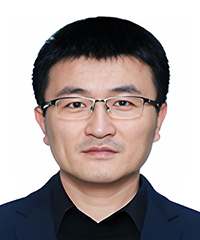
Yufei Ma: Professor, Harbin Institute of Technology, China.
Research field: Optical Sensors, Trace Gas Detection, Laser Spectroscopy, Solid-state Lasers, and Optoelectronics.
Yufei Ma is a Professor at Harbin Institute of Technology, China. He is an Optica Fellow, recognized among The World's Top 2% Scientists (2022-2024), included in the "Top 100,000 Global Scientists List", and awarded as an Elsevier China Highly Cited Scholar (2021-2023) He is a recipient of the National Outstanding Youth Science Fund. His research focuses on optical sensors, trace gas detection, laser spectroscopy, solid-state lasers, and optoelectronics. With approximately 200 peer-reviewed publications (including 40 ESI hot or highly cited papers), he has delivered over 30 invited presentations at international conferences. He was listed as a Highly Cited Researcher by Elsevier in both 2021 and 2022. Currently, he serves in editorial roles (Editor/Associate Editor/Topical Editor) for nine SCI-indexed journals: Opto-Electronic Advances, Photoacoustics, Optics Express, Optical Engineering, Microwave and Optical Technology Letters, Chinese Optics Letters, Sensors, Applied Sciences, and Frontiers in Physics.
-
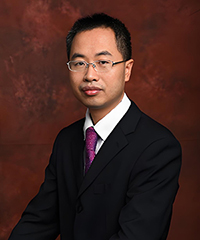
Zhiwen Yu: Professor, South China University of Technology, China.
Research field: Machine Learning, Data Mining, Artificial Intelligence Research.
Zhiwen Yu (S'06-M'08-SM'14) is a Professor in School of Computer Science and Engineering, South China University of Technology, China. He received the Ph.D. degree from the City University of Hong Kong, Hong Kong, in 2008. Dr. Yu has authored or coauthored more than 200 refereed journal articles and international conference papers, including more than 90 articles in the journals of IEEE Transactions, h-index 56,Google citation 16300. He is an Associate Editor of the IEEE Transactions on systems, man, and cybernetics: systems, IEEE Transactions on Neural Networks and Learning Systems and the informatics journal. Dr. Yu is in charge of or take part in more than 30 research projects, such as the National Natural Science Foundation of China (the Key Program、the General Program and the Youth Program), National Natural Science Foundation of China for Excellent Young Scientists, the Key R&D Program of Guang Dong Province, and so on. He is a senior member of IEEE and ACM, a Member of the Council of China Computer Federation from 2016 to 2023 (CCF). Ranked among the top 2% of scientists worldwide in Stanford University's 2024 World's Top 2% Scientists List.
-
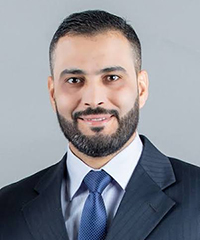
Wadii Boulila: Professor, Prince Sultan University, Saudi Arab.
Research field: Computer Vision, Artificial Intelligence, Uncertainty Modeling, Remote Sensing, Trustworthy AI.
Wadii Boulila is a Professor of Computer Science at Prince Sultan University, where he also serves as the Director of the Robotics and Internet-of-Things (IoT) Lab. With over 20 years of experience in computer science research and innovation, his research interests span robotics, Internet of Things, intelligent systems, and advanced computing technologies. He has been actively involved in interdisciplinary research projects focusing on the design, modeling, and development of intelligent systems and IoT-enabled solutions for real-world applications. Through his leadership in research and project management, he promotes collaboration across disciplines and contributes to advancing emerging technologies. He is also committed to mentoring young researchers and fostering an innovative academic environment.
-
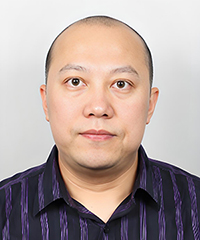
Xiaochun Cheng: Professor, Middlesex University, UK.
Research field: AI, Data Science, Data Protection, Smart Secure Communication, Knowledge Engineering.
Xiaochun Cheng is an IEEE Senior Member (since 2004). He received his BEng degree in Computer Engineering with First Class Honours and his PhD degree in Computer Science with Distinction. He has been working at UK universities for many years and has made significant contributions to computer science research and applications. He has participated in and led major research projects, including a €16 million funded project. His research excellence has been recognized through five Best Conference Paper Awards, and seven of his papers have been listed among the top 1% highly cited papers in their fields according to Essential Science Indicators (ESI) based on Web of Science data. He has also won three national-level competitions and received a national award. Furthermore, he contributed to two computer solutions that achieved the best national results and were adopted nationwide. His work has demonstrated strong academic influence and practical impact in advancing computer technologies.
-
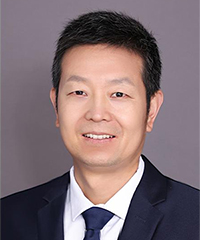
Lingfeng Shi: Professor, Xidian University, China.
Research field: Sensor Signal Processing, Positioning and Navigation, Wireless Communication, Integrated Circuit Design.
Prof. Lingfeng Shi received the B.Eng. degree in Radio Engineering from China Institute of Metrology (now China Jiliang University) in 1995, the M.Eng. degree in Circuits and Systems from Xidian University in 2003, and the Ph.D. degree in Circuits and Systems from Xidian University in 2008. His current research interests include sensor signal processing, positioning and navigation, wireless communications, and integrated circuit design. He has published over 130 journal papers, including more than 100 in academic journals and over 20 in domestic and international conference proceedings. Among them, over 90 papers are indexed by SCI (nearly 20 in Q2 or above, and 30 in IEEE journals), more than 10 by EI, and over 20 by ISTP. He holds 21 authorized national invention patents, 1 authorized utility model patent, has filed 6 national invention patent applications, and has successfully transferred 2 invention patents. He is currently a Senior Member of IEEE. He serves as a reviewer for more than 20 prestigious SCI-indexed international academic journals.